Hyperliquid vs HYPE: Is It an Exchange or a Coin?
Hyperliquid is the exchange. HYPE is the token it issued. Here's how the two connect, why HYPE keeps climbing, and the real risks of trading with no KYC.

Search for Hyperliquid and you get two different stories. Some pages call it an exchange. Others show you a price chart. So which is it — an exchange, or a new coin? Both, actually. Hyperliquid is the exchange. HYPE is the token that exchange created.
Let's break down what Hyperliquid actually is, what HYPE does, and why traders are choosing this platform.
💡One quick thing before we start.
- Hyperliquid referral link: https://app.hyperliquid.xyz/join/EVENTCODE
- Haven't signed up yet?: [How to sign up for Hyperliquid]
1. Hyperliquid is the name of the exchange.
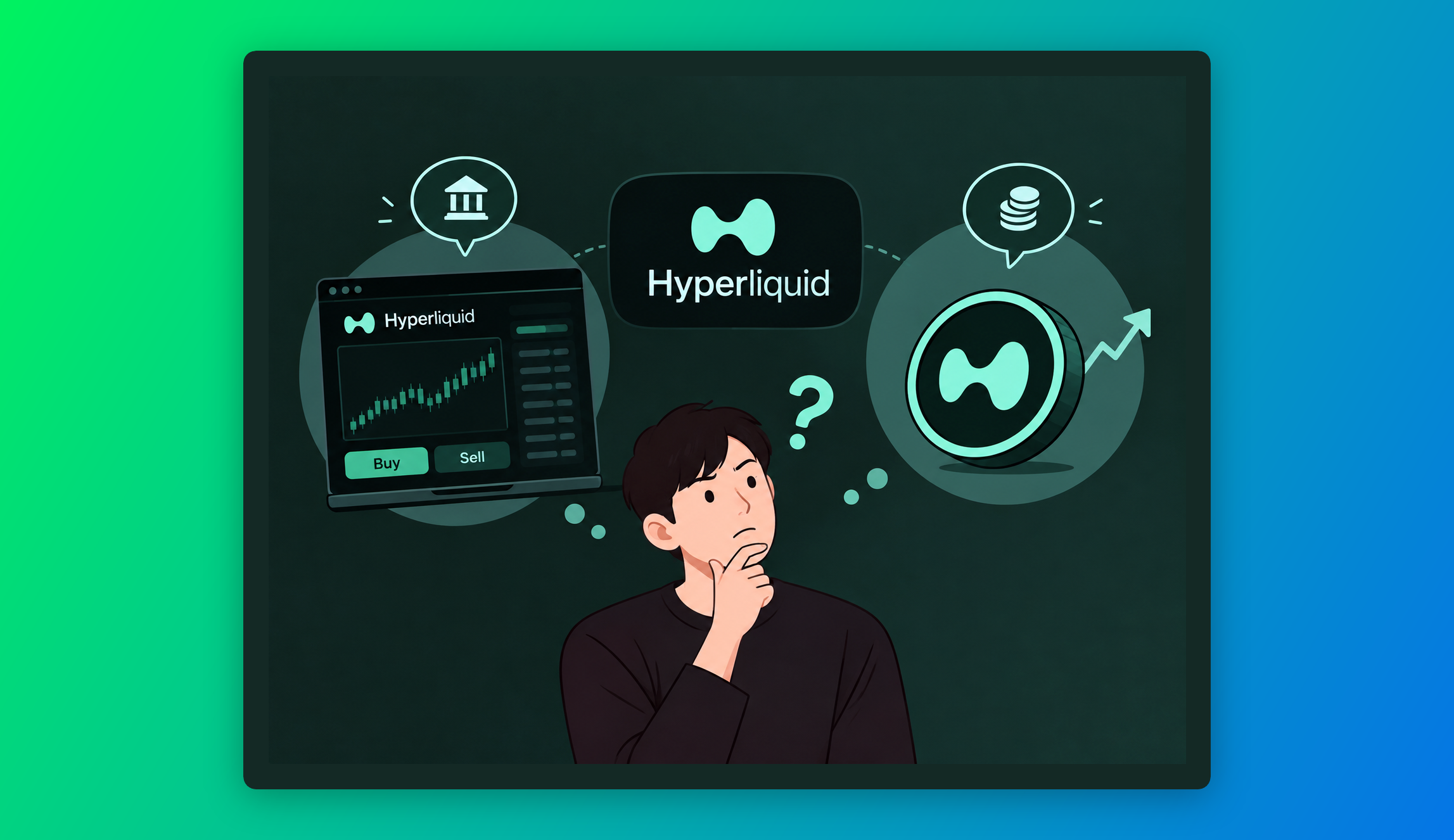
Hyperliquid is an exchange. Same category as Binance or Bybit — with one big difference. There's no sign-up. When you hear "exchange," you probably picture the whole routine: verify your email, photograph your ID, upload it, wait for approval. Hyperliquid skips all of it.
Log in with the email you already use, and you're trading. Sounds impossible — how do you trade with nothing but an email address? Because the moment you log in, the platform spins up a fresh crypto wallet address that only you control.
The real break from a centralized exchange: there is no KYC at all. No ID card, no passport photo, no selfie. You stay anonymous.
Ready to start on Hyperliquid? 👉 Check the [Hyperliquid referral code] here!
2. HYPE is the coin that exchange issued.

This is where most people get tangled up. "Hyperliquid" is the platform. "HYPE" is the token that platform issued.
Think of Hyperliquid as a giant department store, and HYPE as the gift card that only works inside that building — except it's also equity in the store itself. So why is this coin running so hard right now? The mechanics are simpler than you'd expect.
With most coins, the first question is "where does this actually get used?" HYPE has a clear answer, plus a built-in tailwind on the price side.
- Fuel for fees: Any transaction you make on Hyperliquid pays its gas in HYPE. More people using the exchange means more demand for the token — automatically.
- Buybacks that return revenue: This is the real engine. Hyperliquid is one of the highest-volume decentralized exchanges on the planet. The team takes the fee revenue it earns and buys HYPE back on the open market.
It works like a stock buyback. A profitable company repurchasing its own shares pushes the price up — and the better Hyperliquid's business does, the more HYPE gets bought and taken out of circulation. Supply gets scarce fast.
Bottom line: Hyperliquid is the venue that generates the revenue. HYPE is the fuel and the ownership stake in that venue.
If your read is "more and more people are trading on Hyperliquid," you buy HYPE. If your read is "I want to trade perps without handing over my ID," you use the exchange. Two different plays, one ecosystem. Make sense now?
3. Why do traders actually use Hyperliquid?

Fair question at this point. Decentralized is nice, but if you're just placing trades, anonymity on its own isn't much of a selling point. Binance and Bitget are sitting right there with deep books and every feature you could want — so why are traders piling into Hyperliquid instead? For someone coming in fresh, three advantages stand out immediately.
① A faster way in (no identity verification)
Getting onto a centralized exchange means passport photos, selfie checks, and the rest of the KYC gauntlet. Hyperliquid skips verification entirely. An existing wallet or an email address is all you need, and you're trading — which is exactly why it appeals to anyone who'd rather not hand over personal data or sit through a long sign-up.
② Your deposits stay yours (no exchange insolvency risk)
FTX made this lesson expensive. On a centralized exchange, the company custodies your funds, which means you're exposed to whatever that company does behind the scenes. Hyperliquid is a DEX. The platform provides the trading engine and nothing else — your assets sit in your own wallet, governed by smart contracts. That puts you well outside the blast radius if an operator mismanages funds or goes under.
③ New assets show up faster (pre-launch trading)
Hyperliquid's architecture lets it list new markets faster than the major exchanges can. Early-stage projects and tokens the big exchanges haven't formally listed yet often show up here first, as pre-launch perpetual futures. For traders who want to research fast-moving corners of the market and get real trading data on them early, that alone is reason enough to be here.
4. So what's the catch?

Read this far and it sounds like a no-brainer. But every advantage above flips into a drawback from the other side. If you're not handing your assets to an exchange, there's also no exchange to answer for it when something goes wrong.
Nobody is going to make you whole.
When a centralized exchange gets hacked, the company investigates and a compensation process kicks in. Binance, a centralized exchange, keeps a fund called SAFU set aside for exactly that, and major exchanges have covered hack losses out of their own pocket before.
There's no such backstop on Hyperliquid. Nobody's holding your money, so the platform going under can't touch you — but if funds leave your wallet, that's 100% on you.
Most hacks happen on your end, not the exchange's.
This is the part that matters. People rarely get drained because an exchange server was breached. They get drained because they got sloppy with their own security.
Connecting a wallet to a spoofed site. Storing a seed phrase in a photo album or a notes app. Hitting "sign" without reading what's in the transaction. Traders have lost real money googling Hyperliquid, clicking the sponsored ad at the top of the results, and connecting their wallet to the fake site behind it. (Coverage here: Fake Hyperliquid Google ad linked to Inferno drainer steals USDC)
On a centralized exchange, even a stolen password runs into OTP, then a withdrawal address whitelist, and the exchange may freeze a withdrawal that looks off. Several layers of defense. A wallet has none of that. One signature and it's done.
Mistakes don't get reversed
Wrong address. Wrong network, and now your coins are floating in limbo. Lost seed phrase. On a centralized exchange, you can at least open a support ticket.
On Hyperliquid, recovery is largely off the table. You never did KYC, so there's no ID to check and no path back into the account. The reason signing up was so easy is the same reason recovery is impossible.
So: no insolvency risk, no KYC, full anonymity. None of that is free. You get it by taking the risk onto yourself instead. Depending on how disciplined you already are about wallet security, that's either a genuine upgrade or a weight you don't want to carry.